
Wharton Place is a rare offering on Virginia's Eastern Shore:
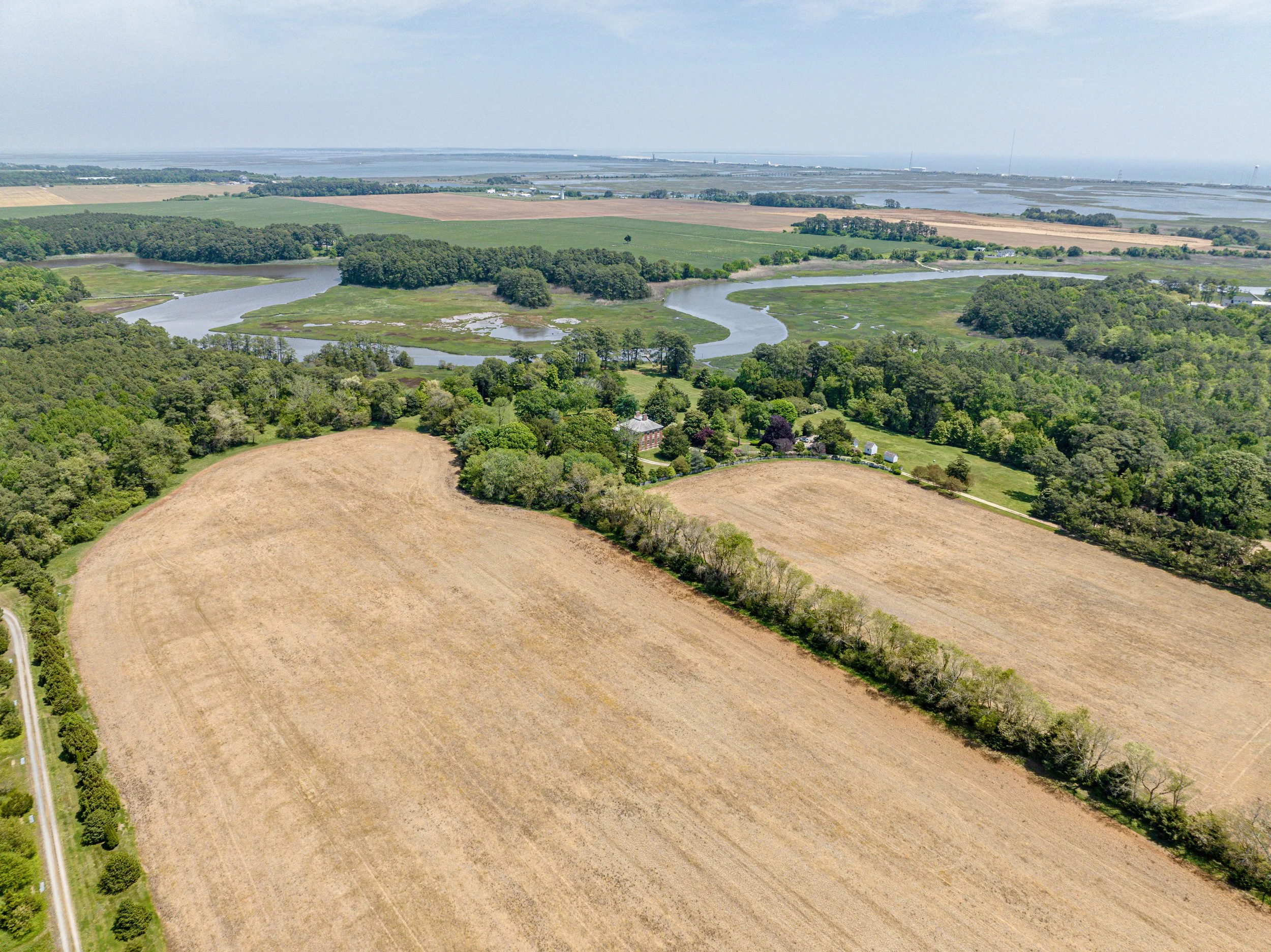
100 acres of working sporting ground, built around marsh, timber, and tillable fields, with a single family's stewardship behind it for generations. This is not a subdivided farm or a staged waterfront lot. It's a complete ecosystem, supporting waterfowl, turkey, and whitetail in numbers that reflect decades of careful land management.
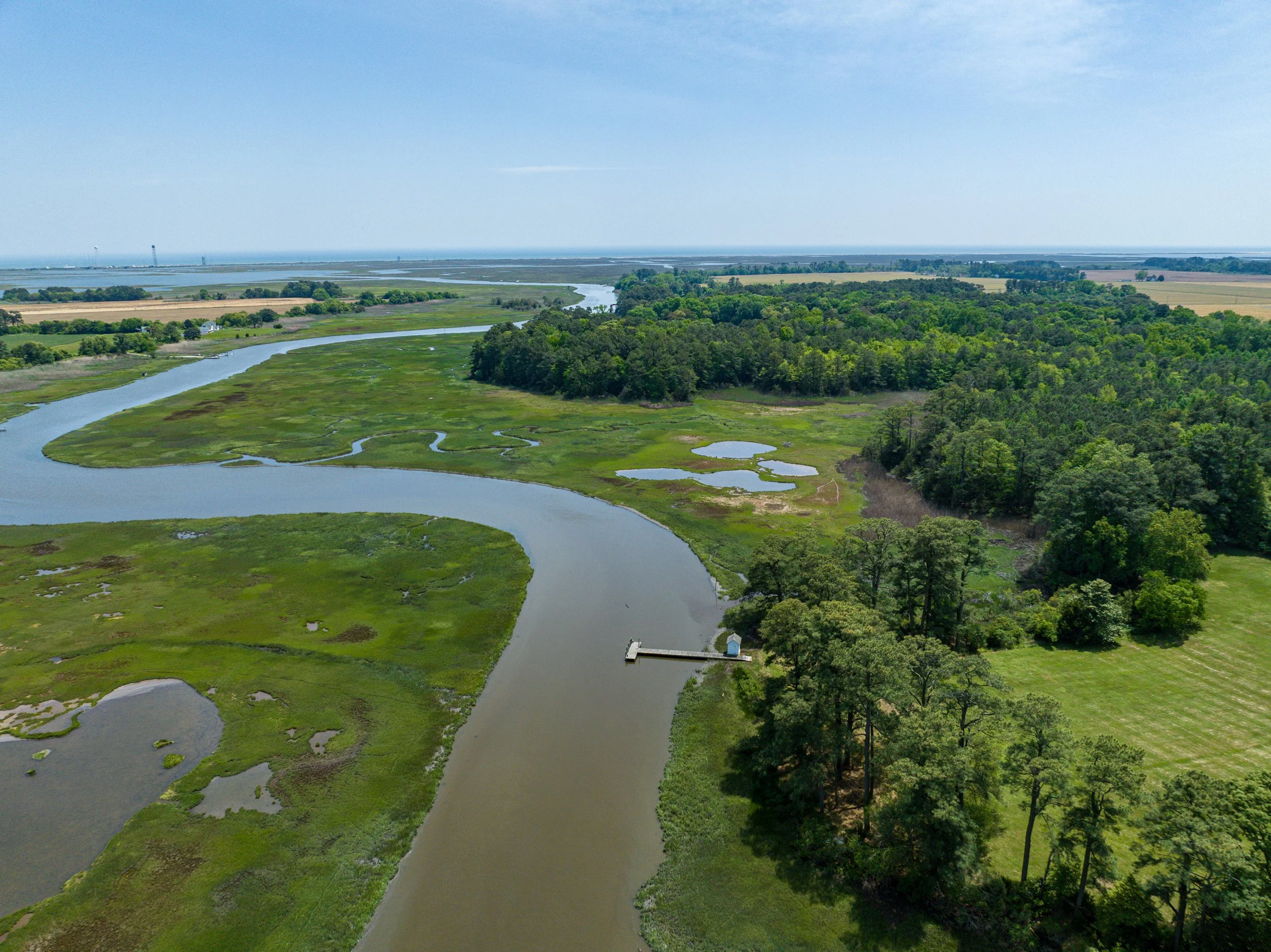
The marsh sets the tone. Twelve acres of tidal wetland connect directly to Assawoman Creek, with navigable water running out to the Barrier Islands and the Atlantic beyond. For a waterfowler, that access is the difference between a property with a pond and a property with a flyway. Add twenty acres of mixed hardwood for cover, and fifty-nine acres of tillable sandy loam that can support food plots or tenant income, and the result is ground built for hunting first.
A conservation easement, held by the Virginia Eastern Shore Land Trust across all fourteen parcels, protects that ground permanently. The marsh can't be filled, the timber can't be cleared for development, and the viewshed can't be broken up and sold off. What a buyer sees today will still be there for the next generation.
At the center sits a nearly 9-acre park-like setting holding the historic residence, a 19th-century Federal-style home with Georgian influences, listed on the National and State historic registers. Referenced in print since 1895 and featured twice in Garden & Gun, the 4,410-square-foot home pairs original character with a modern geo-thermal HVAC system.
Wharton Place suits a buyer looking for more than acreage: a working sporting property, protected water access to the Atlantic, and a documented place in Eastern Shore history, all on one contiguous piece of ground.
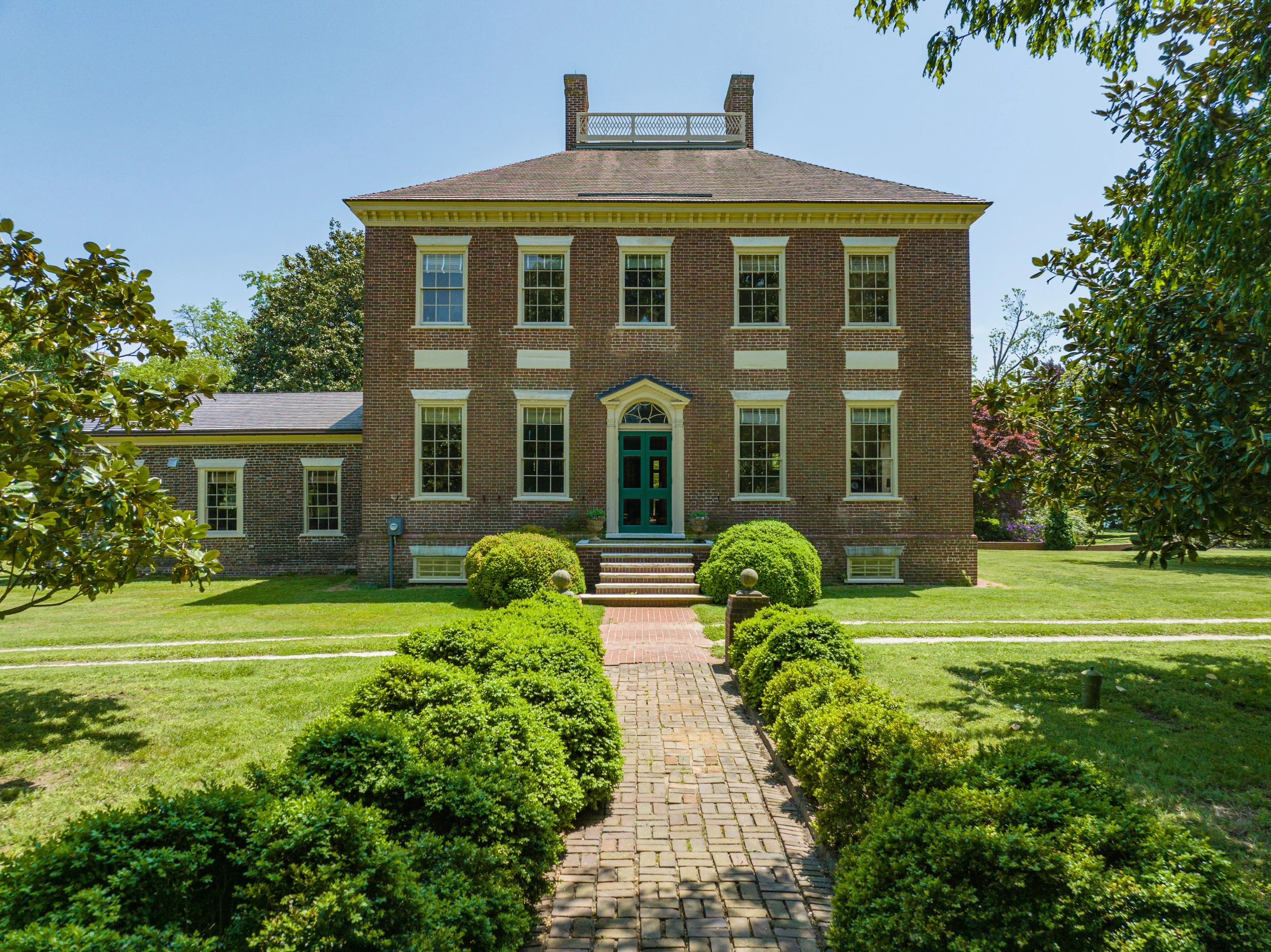
“The exterior-door frames have reeding and fish-scale carving at the sides, with a nice pediment over a fanlight. Between the first and second-floor windows may be observed flush board paneled apron; originally they were treated with an applied swag, the plastic work of which has all succumbed to the weather, but its imprint can still be seen on some of the aprons.”
Ralph T. Whitelaw, Virginia’s Eastern Shore, Volume II, 1951.